

































Web Scraping · Proxynet Blog – Page 5




Published
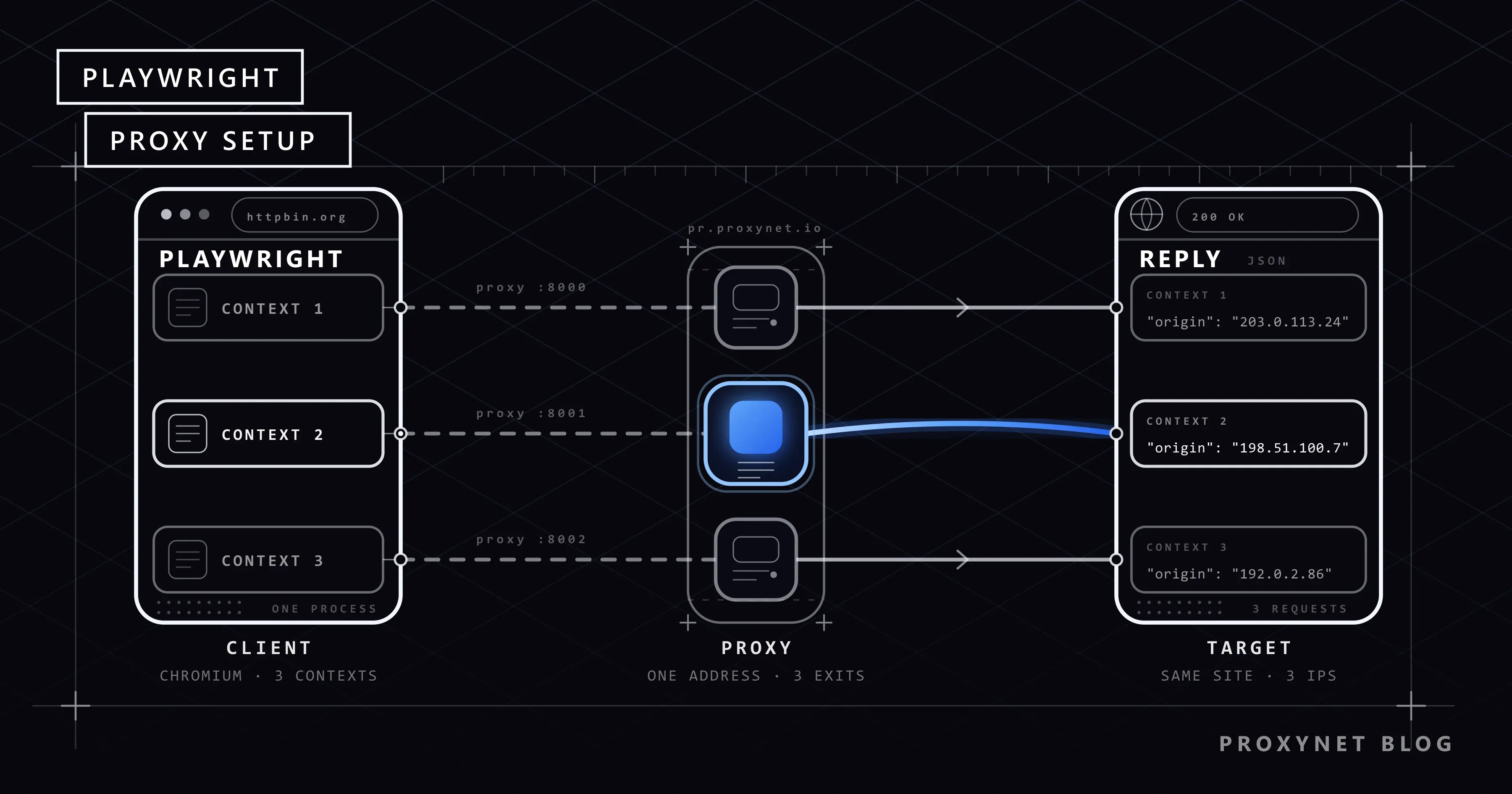
What Is Playwright and How to Use It With a Proxy
In Playwright, a proxy is set at browser launch or separately per context. We cover authentication, SOCKS5 and rotation with Python and Node.js examples.
Written by: Acar Diveroli
Published
Playwright vs Selenium: Which One Should You Pick?
Playwright waits for elements on its own and takes a proxy per context; Selenium covers more languages and real Safari. We wrote the same job in both.
Written by:Acar Diveroli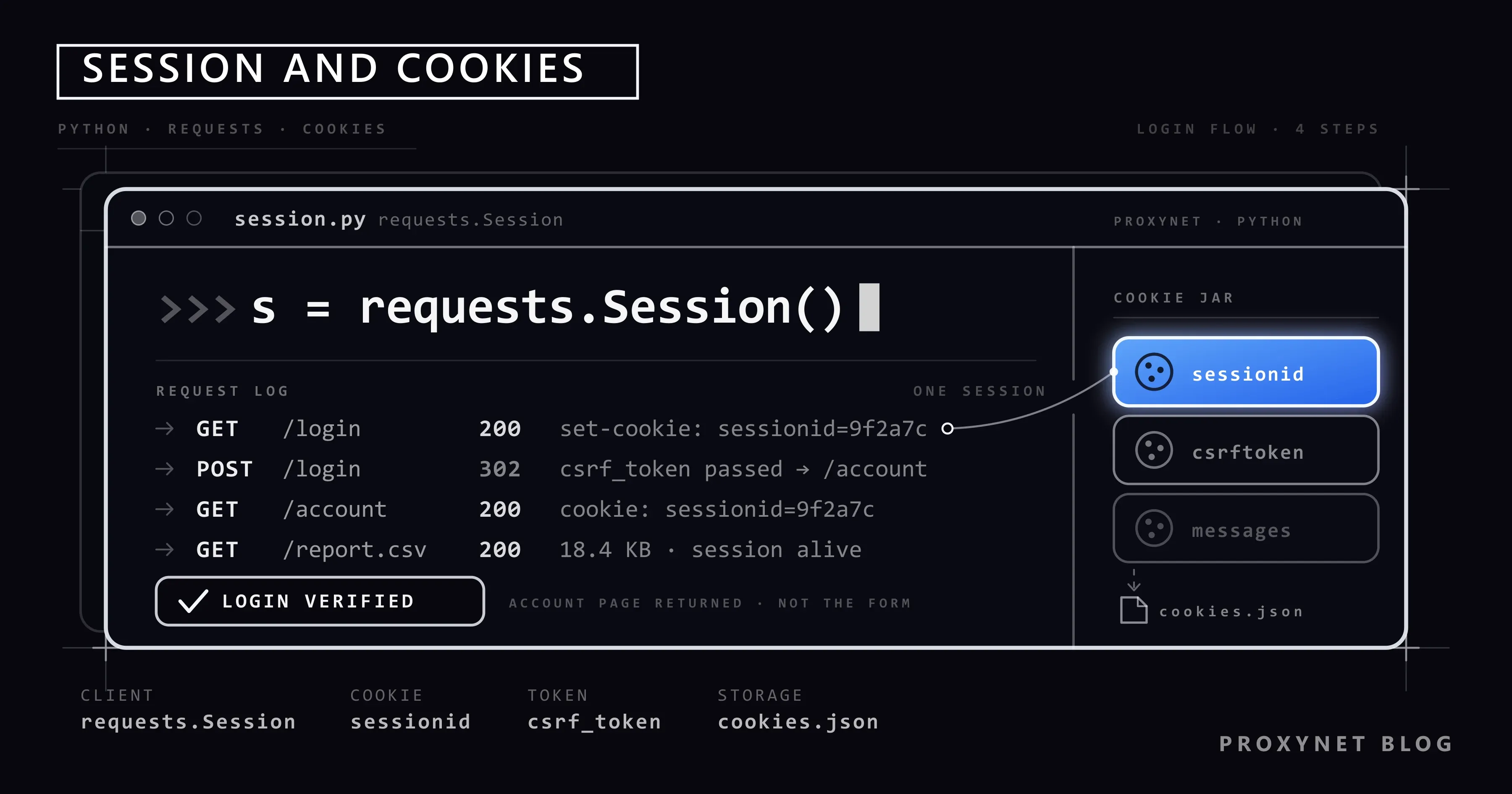
Published
Sessions and Cookies in Python: Logging In With requests
requests.Session carries cookies between requests and keeps a session alive. Read the CSRF token from the form, verify the login and store the session on disk.
Written by:Acar Diveroli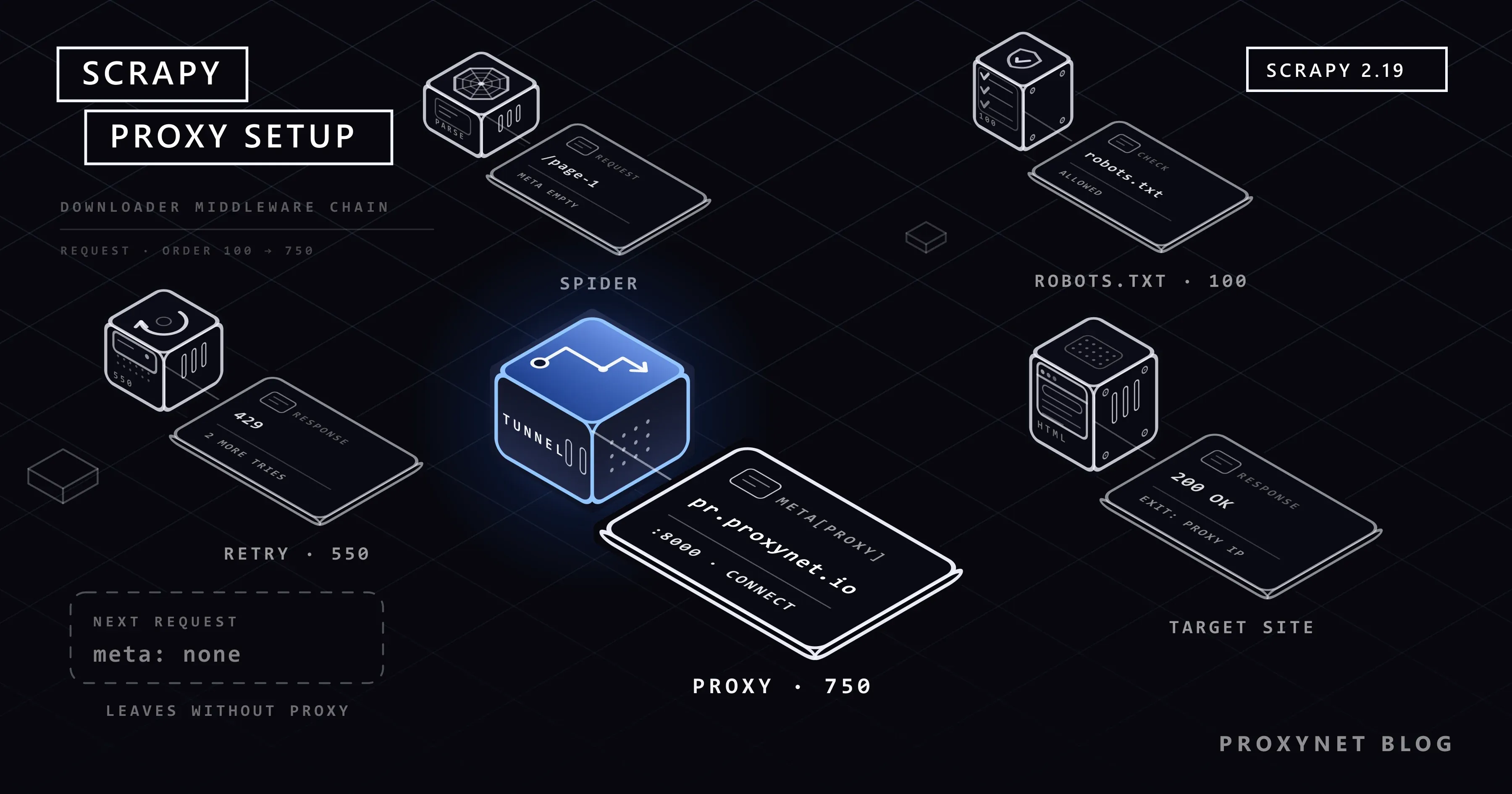
Published
What Is Scrapy and How to Use It With a Proxy
In Scrapy, a proxy is set through the request meta field or a middleware. Setup, authentication, AutoThrottle settings and rotation, explained with code.
Written by:Acar Diveroli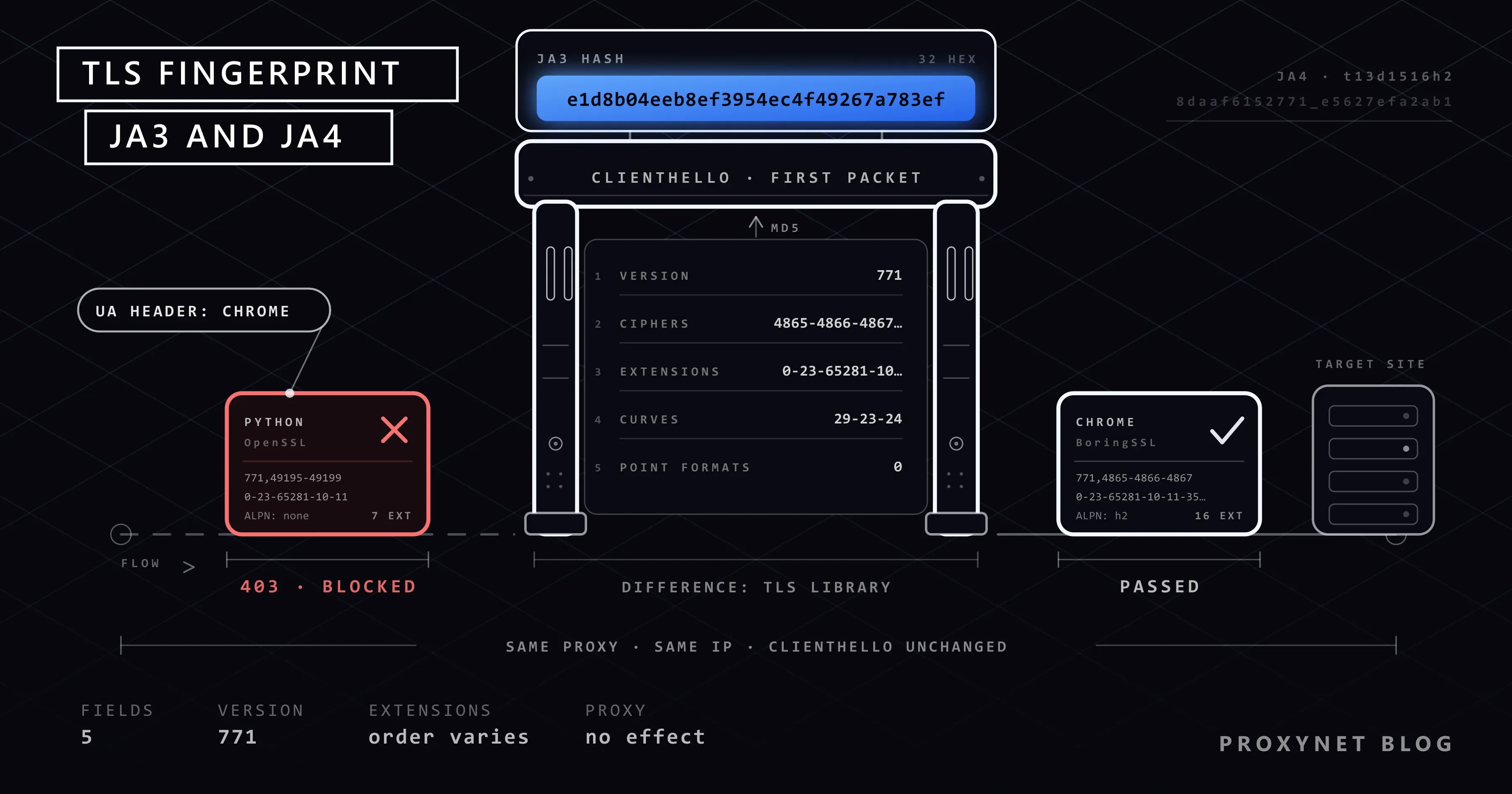
Published
What Is TLS Fingerprinting and JA3? How It Works
A TLS fingerprint is an identifier built from the cipher and extension lists in a client's ClientHello. How JA3 and JA4 are computed, and what a proxy changes.
Written by:Acar Diveroli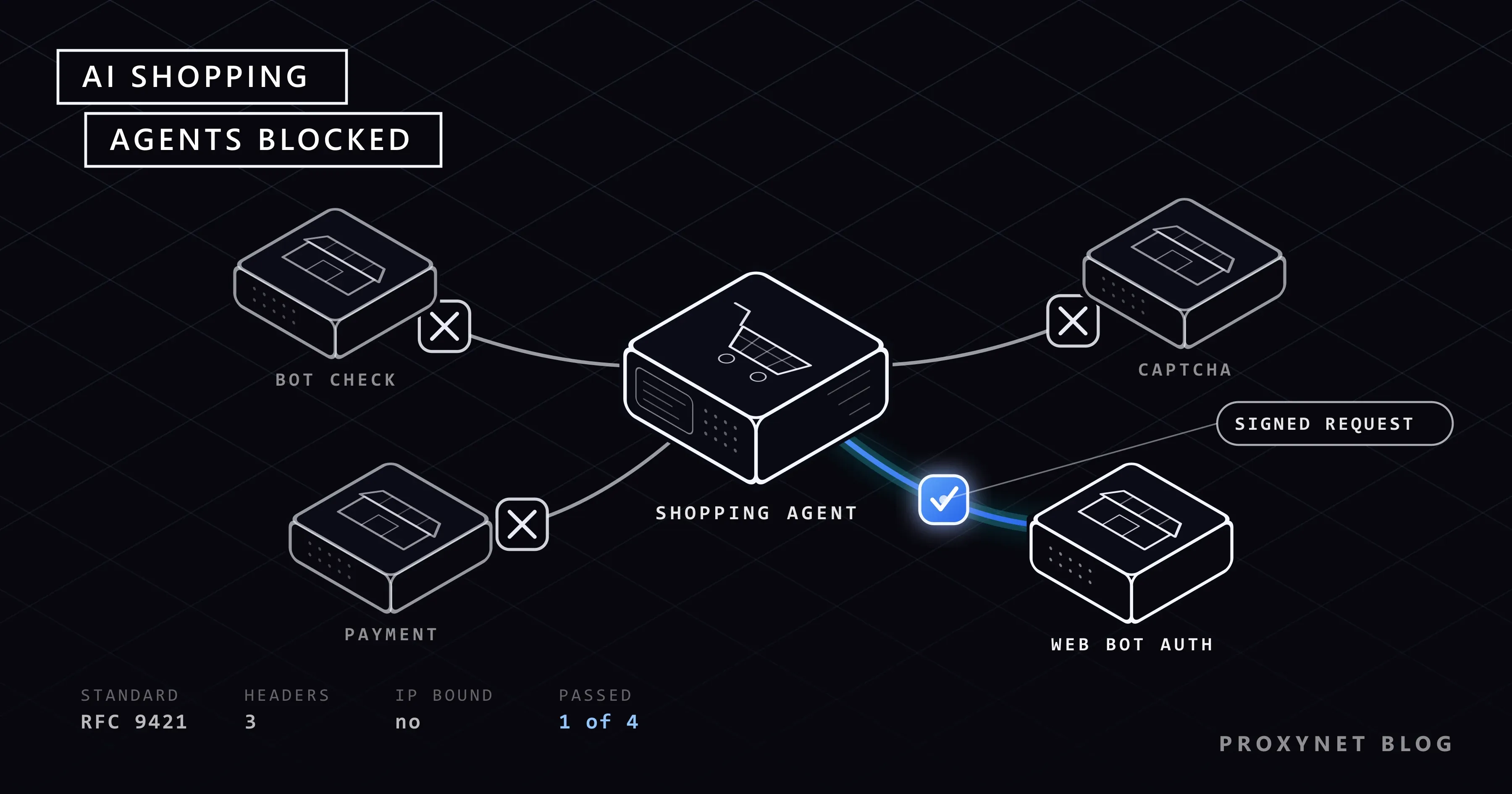
Published
Why Are AI Shopping Agents Blocked on Websites?
Shopping agents hit bot protection because sites can't tell a human from an authorised agent. We explain why, and new fixes such as signed agents.
Written by:Acar Diveroli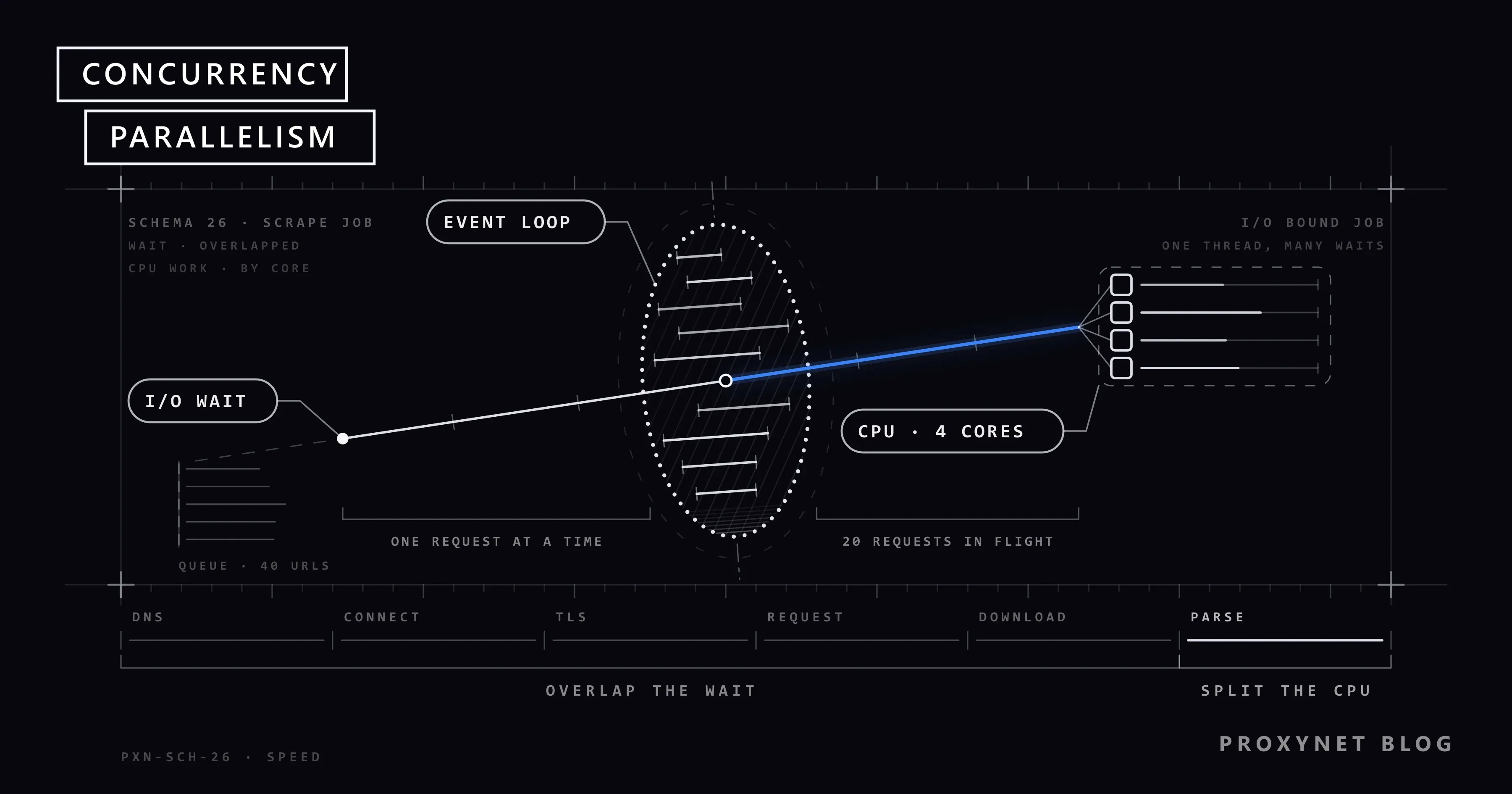
Published
Concurrency vs Parallelism: What Sets Scraping Speed?
Concurrency makes use of waiting time, parallelism makes use of CPU power. We explain which one speeds up scraping, with Python and Node.js examples.
Written by:Acar Diveroli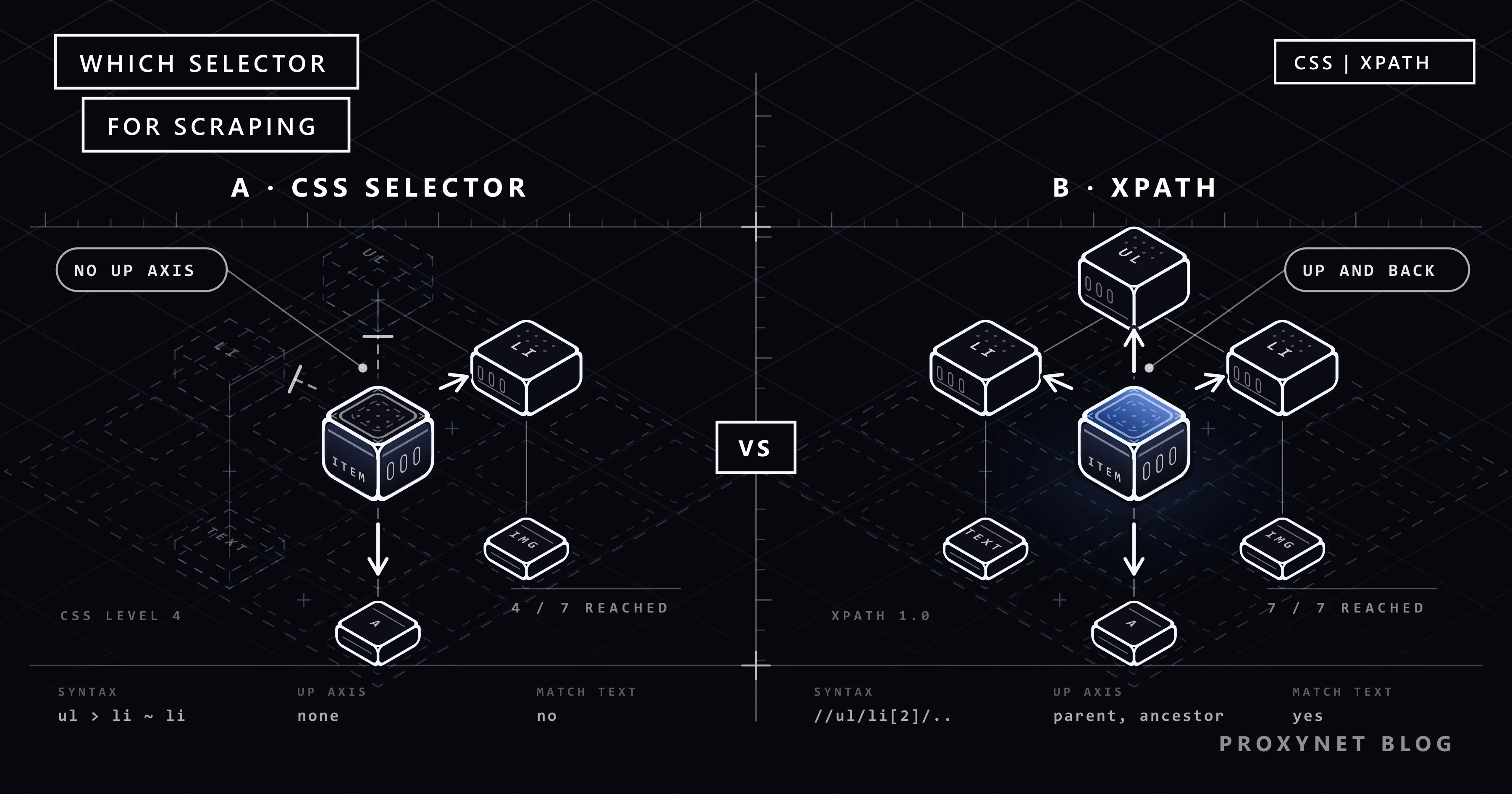
Published
CSS Selector vs XPath: Which One for Web Scraping?
CSS selectors are short and readable, while XPath can also select by text and parent elements. We compare syntax, speed and Python examples for both methods.
Written by:Acar Diveroli
Published
Web Scraping with GPT-6 Astra: What Changed?
GPT-6 Astra improves page understanding and browser control, but it does not solve blocks, CAPTCHAs, or rate limits. Its real place in a scraping flow.
Written by:Acar Diveroli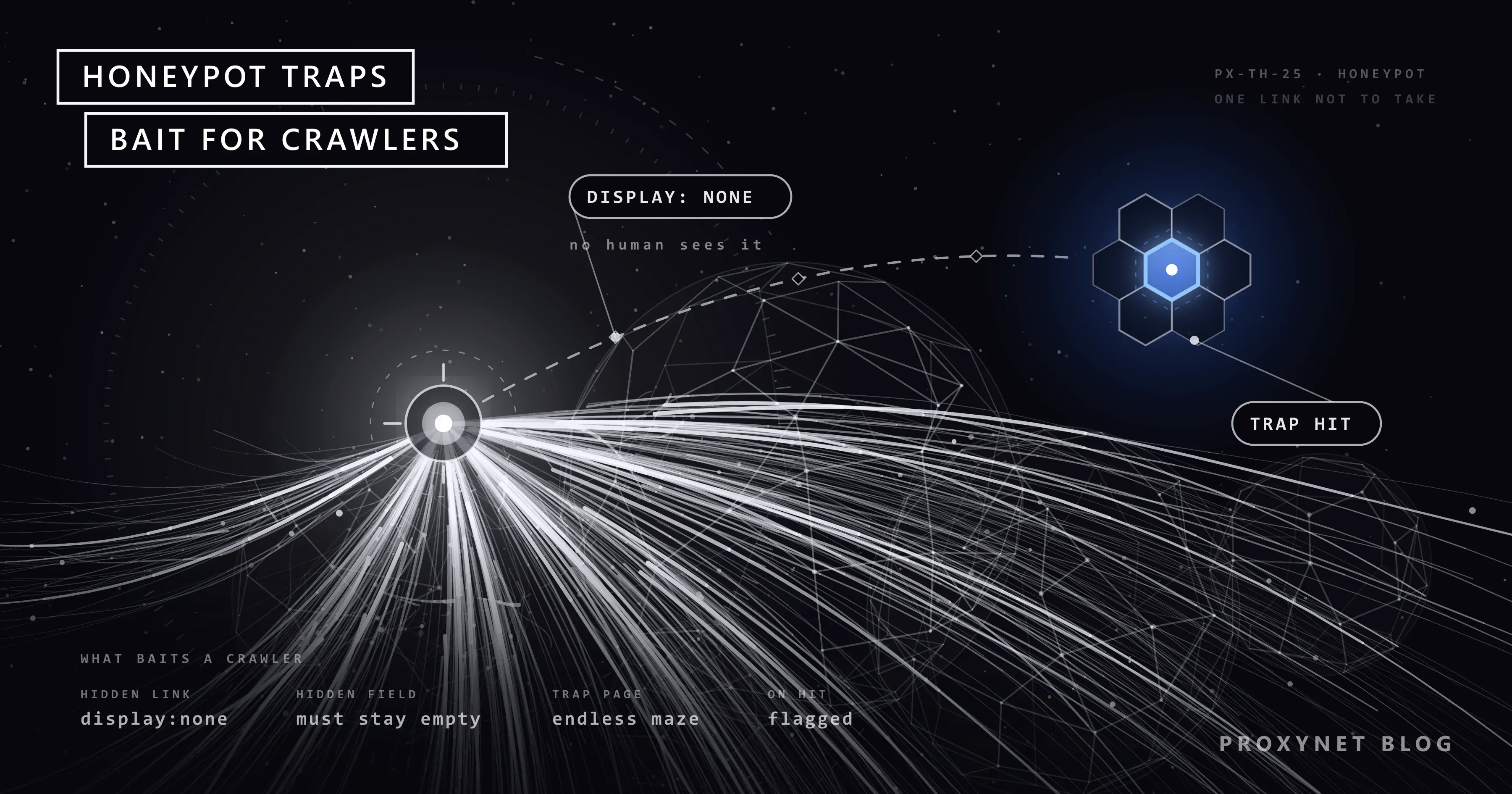
Published
What Are Honeypot Traps and How Do They Affect Scraping?
Honeypots are hidden links that visitors never see but bots get caught on. We explain how they work and how they flag a scraper, without teaching evasion.
Written by:Acar Diveroli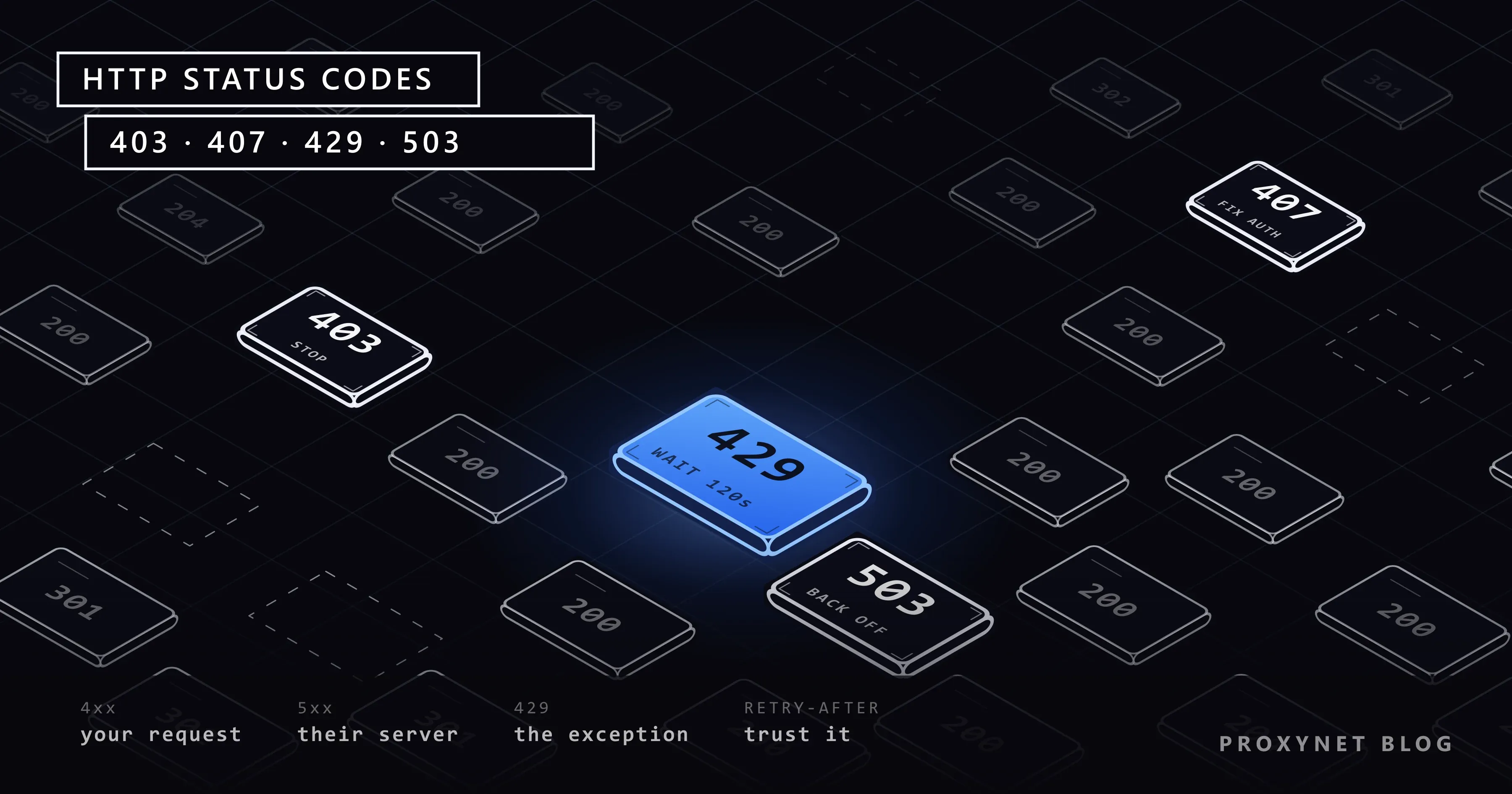
Published
HTTP Status Codes in Web Scraping: 403, 407, 429, 503
403, 407, 429 and 503 responses point to different problems in scraping. We explain what each code means, its causes and how to retry properly with Retry-After.
Written by:Acar Diveroli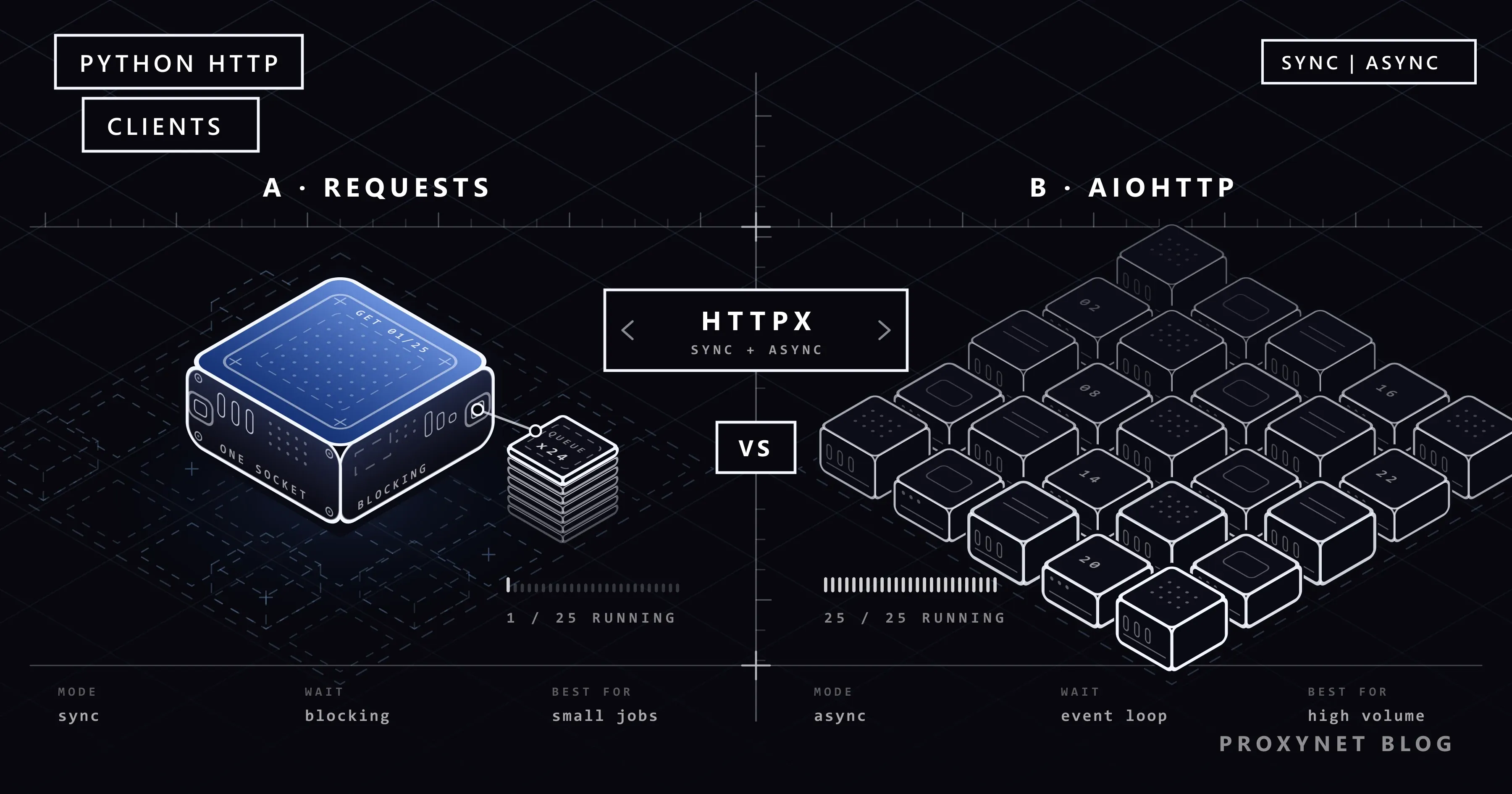
Published
HTTPX vs. Requests vs. AIOHTTP Compared
Requests is simple and synchronous, AIOHTTP is async, and HTTPX offers both. Proxy usage, performance, and which library fits which project, with code examples.
Written by:Acar Diveroli
What Is Playwright and How to Use It With a Proxy
Written by: Acar DiveroliTutorialPublished
Playwright vs Selenium: Which One Should You Pick?
Written by: Acar DiveroliComparisonPublished
Sessions and Cookies in Python: Logging In With requests
Written by: Acar DiveroliTutorialPublished
What Is Scrapy and How to Use It With a Proxy
Written by: Acar DiveroliWeb ScrapingPublished
What Is TLS Fingerprinting and JA3? How It Works
Written by: Acar DiveroliWeb ScrapingPublished
Why Are AI Shopping Agents Blocked on Websites?
Written by: Acar DiveroliAIPublished
Concurrency vs Parallelism: What Sets Scraping Speed?
Written by: Acar DiveroliComparisonPublished
CSS Selector vs XPath: Which One for Web Scraping?
Written by: Acar DiveroliComparisonPublished
Web Scraping with GPT-6 Astra: What Changed?
Written by: Acar DiveroliAIPublished
What Are Honeypot Traps and How Do They Affect Scraping?
Written by: Acar DiveroliWeb ScrapingPublished
HTTP Status Codes in Web Scraping: 403, 407, 429, 503
Written by: Acar DiveroliWeb ScrapingPublished
HTTPX vs. Requests vs. AIOHTTP Compared
Written by: Acar DiveroliComparisonPublished
No posts match
Published
Published